0
There are places in Liverpool where history doesn’t just sit quietly in the past – it lingers, breathes, and waits to be set in motion again. Stepping inside the long-abandoned Gaumont Cinema on Park Road in Toxteth is one of those moments.
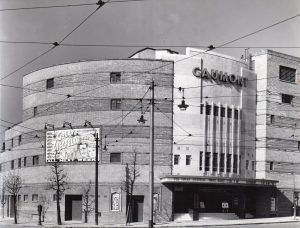
Opened in 1937 on the site of the old Dingle Picturedrome, the Gaumont was once a jewel of South Liverpool; a 1,500-seat Art Deco picture palace designed to impress from the very first glance.
From its sweeping curved façade to its grand auditorium crowned by a glowing central dome, this was cinema as spectacle – a place where entire communities gathered beneath soft lighting and velvet seats to find a sense of collective escapism.
But what made the Gaumont truly remarkable and deserving of a place in cinema history – isn’t just its scale or beauty – it’s innovation.
Hidden away in the projection room was a system ahead of its time: one of the first automated reel-changing mechanisms, eliminating the need for manual changeovers and controlling lighting and curtains in sync with the film.
In an era where cinema was still finding its technological footing, this building was quietly shaping the future of film presentation.
Walking through it today, that ambition still hums beneath the dust. The bones remain; the wide stage, the ghost of the proscenium arch, the echo of the Wurlitzer organ that once filled the room with sound.
Purple Revolver was given a rare chance to peer inside the once welcoming grandeur and imagine what could be again.
You can almost hear the audience, feel the anticipation as the lights dimmed and the projector flickered to life.
Like many cinemas of its generation, the Gaumont couldn’t outrun changing times. It closed as a cinema in 1966, reopening as a bingo hall before finally falling silent in 1998.
Since then, it has stood in limbo – occasionally repurposed, often overlooked, but never entirely forgotten.
Buildings like this shouldn’t be forgotten. Not in a city like Liverpool, where culture is currency and creativity runs through the streets. The Gaumont isn’t just an abandoned cinema – it’s an opportunity.
A ready-made home for film, music, performance, and community activity. A space where the past could meet the present in a way that feels authentic, rooted and alive.
Imagine it reborn as a grassroots arts centre. A community cinema. A hub for young filmmakers, musicians and storytellers. The infrastructure is there – what’s needed now is vision.
Liverpool has always been a city that reinvents itself. The Gaumont deserves to be part of that story again.
What do you think it could become? Let us know your ideas in the comments.